

Macrocyclics, in collaboration with the University of Tübingen, is developing new tools for noninvasive metabolic imaging. Lactate is a key metabolic driver in oncology and immunology, and its accumulation in the tumor microenvironment reflects the altered glycolysis typical of many cancers. Together, the teams are pursuing a unique group of macrocyclic, lanthanide-based shift reagents (SRs) derived from the PCTA ligand to enable the precise detection of extracellular lactate using chemical exchange saturation transfer (CEST) MRI. These PCTA-based agents offer exceptional thermodynamic stability, kinetic inertness, and safety, positioning them as promising candidates for future translational imaging applications.
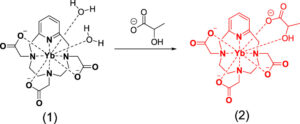 Preclinical work has shown that Yb-PCTA and Eu-PCTA complexes selectively interact with lactate, producing distinct MRI shifts that allow clear visualization of extracellular lactate within tumors. The studies demonstrate both sensitivity and in vivo safety, highlighting the potential of these agents for cancer metabolic profiling and staging
Read the open access publication in JACS